
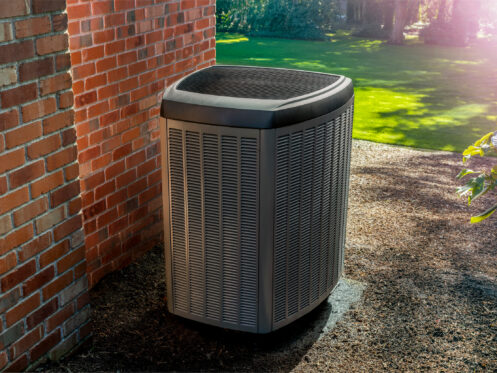
p>When exploring modern, energy-efficient HVAC options, you’ll frequently encounter two terms: heat pumps and ductless mini-splits. You may be wondering how they differ. The two are closely related, and sometimes, they can be the same thing. The first term describes a technology, while the second describes a system design.
Heat pump technology provides both heating and cooling, while ductless mini-split is a system configuration that delivers air without ducts. Many mini-splits use heat pump technology, but not all heat pumps are mini-splits. Making the right choice for your home in Canton, OH depends on your property’s layout, your existing HVAC infrastructure, and your comfort goals.
At GMC Pros, we’ve been helping homeowners navigate their heating and cooling options since 1992. Our goal is to provide clear, honest information, so you can feel confident in your decision. We’ll break down the differences and similarities to help you determine the best fit for your home.
What Is a Heat Pump?
A heat pump is an incredibly efficient, all-in-one electrical appliance that handles both heating and air conditioning for your home. It works by moving heat from one place to another.
Transfers Heat Instead of Generating It
The core principle of a heat pump is heat transference. Using a refrigerant cycle, similar to that of a refrigerator or air conditioner, it can absorb heat from a cold place and release it into a warm one.
In the summer, it pulls heat from inside your home and transfers it outdoors. In the winter, it reverses this process, extracting ambient heat from the outdoor air and moving it inside to warm your home. Because it moves heat rather than creating it, it’s a highly energy-efficient process.
Provides Both Heating and Cooling
This ability to reverse its operation is what makes a heat pump a year-round comfort solution. With the flip of a switch on your thermostat, the system can change from cooling mode to heating mode. This eliminates the need for two separate systems. It streamlines maintenance and provides versatile, efficient air conditioning and heating from a single unit.
Can Be Ducted or Ductless
Here is where the connection to mini-splits begins. Heat pump technology is flexible and can integrate into two main types of systems. A central or ducted heat pump connects to a traditional network of ductwork to distribute conditioned air throughout your home. A ductless heat pump powers a ductless mini-split system.
Is a Ductless Mini-Split the Same as a Heat Pump?
A ductless mini-split is a specific type of HVAC system that often uses heat pump technology. So, while they aren’t the same, a mini-split is one popular application of a heat pump. The term “mini-split” refers to its physical configuration: a small (“mini”) system that splits into indoor and outdoor components.
How Ductless Systems Deliver Air Directly
The defining feature of a mini-split is that it requires no ductwork. Instead, an outdoor unit connects to one or more indoor air handlers that typically sit on a wall or ceiling inside the room or zone they serve. Each indoor unit contains a quiet fan that blows conditioned air directly into the living space, offering precise and immediate comfort control.
Indoor and Outdoor Unit Configuration
A ductless mini-split system consists of two main parts. The outdoor unit houses the compressor and condenser, while the indoor unit contains the evaporator coil and a blower fan.
These two components connect by means of a small conduit that runs through an exterior wall. This conduit contains the refrigerant lines, electrical wiring, and a condensate drain line. The installation is minimally invasive, usually requiring only a 3-inch hole.
Single-Zone vs. Multi-Zone Setups
Ductless mini-splits offer incredible flexibility. A single-zone setup, featuring one indoor air handler and one outdoor unit, is perfect for conditioning a single room, a new addition, or a converted garage. A multi-zone system allows you to connect up to eight indoor air handlers to a single, powerful outdoor unit.
You can control each indoor unit can independently, giving you the power to create different temperature zones throughout your home. This is a significant advantage for households with different comfort preferences or homes with rooms that are difficult to heat or cool.
Heat Pump vs. Mini-Split: What’s the Actual Difference?
The main difference lies in what each term describes. One refers to the internal workings, while the other refers to the external layout.
Technology vs. System Design
Think of it like a car engine. “Heat pump” is the engine. “Mini-split” is the model of the car. You can use the same engine in different car models, just as you can use heat pump technology in both ducted and ductless systems.
When a System Is Both
When homeowners in Canton are considering a mini-split, they are usually talking about a ductless mini-split heat pump. This is the most common and popular configuration, providing duct-free heating and cooling, zoned comfort, and high energy efficiency. It is a mini-split by design and a heat pump by technology.
When They Are Not the Same
There are two primary instances where the terms are not interchangeable. First, you can have a central heat pump that is not a mini-split. This system uses heat pump technology but distributes air through a network of ducts, serving the entire house from a central air handler.
Second, while less common, you can find cooling-only mini-splits. These systems are designed just for air conditioning and do not have the reversing valve needed to provide heat, so they are not heat pumps.
Where Each System Works Best in Canton Homes
Choosing between a central ducted heat pump and a ductless mini-split system depends on your home’s specific needs and existing setup.
Whole-Home Heating and Cooling Needs
If your Canton home already has a well-maintained ductwork system, a central ducted heat pump is often the most straightforward and cost-effective upgrade. It can replace your existing furnace and air conditioner, using the infrastructure you already have in place to provide efficient, whole-home comfort.
Additions, Basements, and Hard-to-Reach Areas
Ductless mini-splits are the perfect solution for specific problem areas. If you’ve finished your basement, built a sunroom, or have an upstairs bedroom that’s never the right temperature, a single-zone mini-split can provide targeted heating and cooling. It avoids the high cost and complexity of extending your existing ductwork into these spaces.
Homes Without Existing Ductwork
For many older homes in Canton with their original boilers and radiators, adding air conditioning has always been a major challenge. Installing a full duct system is disruptive and expensive. A multi-zone ductless mini-split system is an ideal solution, providing powerful cooling and heating without an inch of ductwork.
Common Misconceptions Homeowners Should Avoid
There is a lot of outdated information about these systems. Let’s clear up a few common myths.
- Modern heat pumps can’t perform efficiently in Ohio’s cold winters.
- Multi-zone mini-splits provide comfort only for certain rooms, not entire homes.
- Indoor units are loud and unsightly.
- All heat pumps are ductless.
How to Choose the Right Option for Your Home
To find the right system, consider the age of your home, whether you have ductwork, and if you want to solve a problem in one area or upgrade your entire home’s HVAC system. Think about whether personalized, room-by-room temperature control is a priority for your family.
Answering these questions will give you a better idea of which path to explore. However, the best way to make a final decision is to consult with a qualified professional. An experienced technician can perform a load calculation, assess your home’s unique layout, and recommend a system that is properly sized and configured for your needs.
Get Expert Guidance on the Right System for Your Space
Understanding the difference between heat pump technology and a mini-split system design is the first step toward choosing a modern, efficient comfort solution. Whether a central heat pump or a flexible ductless system is right for you depends on your Canton home’s characteristics and your family’s comfort goals.
You don’t have to make this decision alone. Since 1992, the team at GMC Pros has been committed to providing our neighbors with honest advice and high-quality installations. We offer free installation estimates and are available 24/7 to answer your questions.
Contact GMC Pros today to schedule a consultation and find the perfect heating and cooling system for your space.